

Choosing a TV wall and ceiling for Eastern Housing
When a single floor plan receives several finish options, the real question is which materials and storage layout match how you live. This short guide helps Eastern Housing homeowners compare a white marble TV wall with slim floating storage against stone/textured feature walls, a geometric false ceiling and wood-pattern continuity toward the dining and staircase. If you have measurements and finish preferences, share them with Best Interior for a tailored comparison.
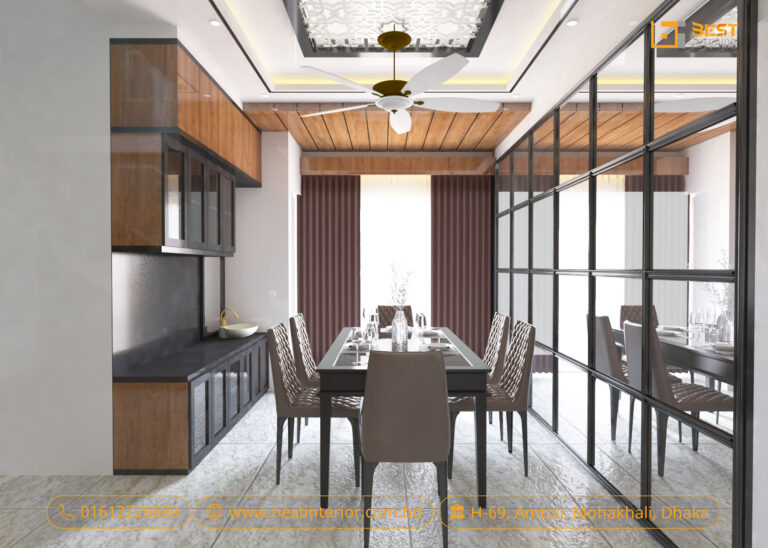
Quick visual comparison
Two practical approaches recur in the design options:
- Marble TV wall with simple floating storage — white marble or marble-effect porcelain, slim display shelf and a shallow wall-mounted cabinet for a light, airy look and minimal visual clutter.
- Textured or stone-effect feature wall with deeper cabinetry — stronger focal wall, room for larger AV equipment or display, paired with coordinated wood panels stretching toward the dining and staircase for visual continuity.
Materials: real marble, porcelain and stone-effect panels
Real marble gives authentic veining and depth, but it is heavy and needs careful fixing and regular sealing to resist stains and etching. Porcelain slabs or marble-effect engineered panels mimic marble’s look with far less weight and lower maintenance; they resist staining and rarely need sealing. For humid climates, engineered panels also reduce risk of movement behind fixings compared with some natural stones.
When deciding, ask: do you prioritise an original stone surface or lower maintenance and lighter installation? For many city apartments, marble-effect porcelain gives the same visual effect without extra structural work.
Floating storage and cabinetry choices
Floating media cabinets keep the floor visible and make cleaning easier, but they are usually shallow (commonly 300–350 mm deep). That works well for set-top boxes and small consoles but can be tight for larger AV receivers or devices that need ventilation. If you plan to store heavier equipment, either specify a deeper, engineered floating unit with reinforced fixings or choose a low-profile floor-standing unit instead.
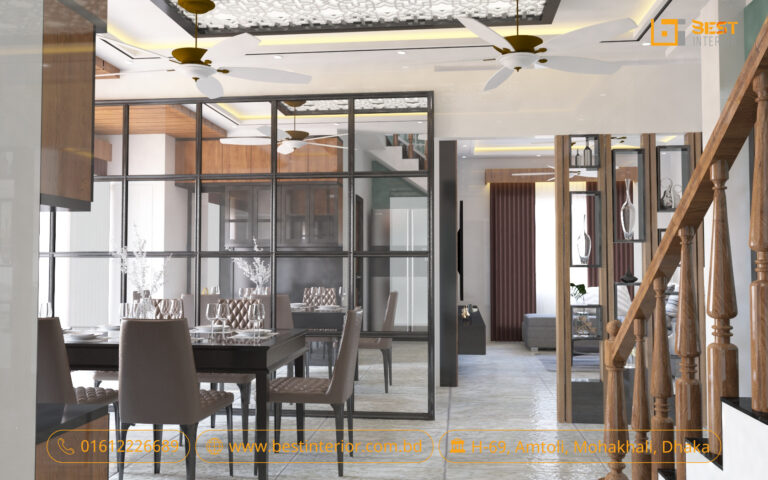
Key practical checks before installation:
- Confirm wall structure and fixing method (block, brick, gypsum board with backup timber or metal anchor).
- List AV equipment with depth and ventilation needs to set cabinet depth and shelving.
- Plan cable routes and an access panel or removable shelf for service access.
Ceiling and lighting coordination
A geometric false ceiling adds interest above the seating area but must be coordinated with lighting so the TV remains comfortable to watch. Combine concealed warm LED cove strips, recessed downlights, spotlights and a central chandelier only after testing glare and reflection at typical viewing angles.
Useful rules of thumb:
- Space recessed downlights at roughly half the ceiling height in feet (for example, an 8-foot ceiling ≈ 4 feet apart) to achieve even ambient lighting.
- Place cove lighting so it washes the ceiling rather than pointing toward the TV; that helps avoid reflections on glossy panels.
- Reserve the chandelier as an accent hub; choose a height and scale that doesn’t conflict with concealed channels needed for LEDs and service runs in geometric elements.
Connecting dining and staircase with wood patterns
Using veneer or engineered-wood panels across the dining-staircase axis creates a coherent look across connected spaces. For a durable result in Bangladesh’s humid climate, prefer engineered veneer panels or moisture-stable laminates rather than raw veneers. Match grain direction, keep consistent sheen (matte or low-gloss) and allow expansion gaps in hidden joints to reduce the risk of visible gaps during the monsoon season.
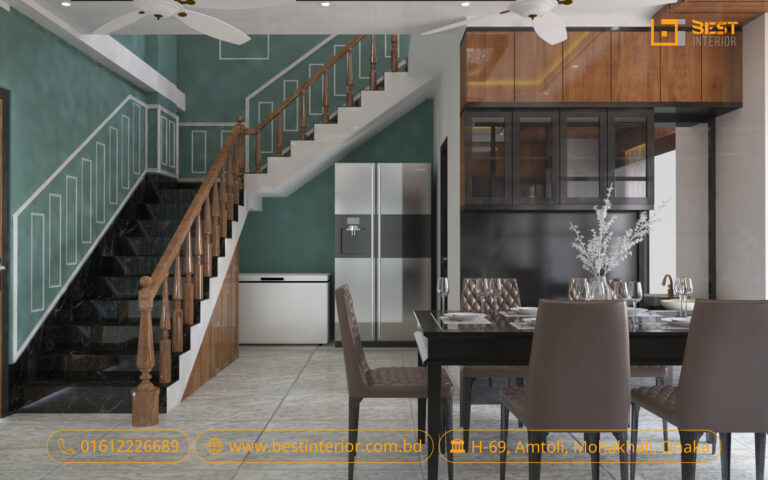
Visually, use repeating geometric motifs or aligned vertical lines to guide the eye from the living area to the dining and staircase without needing identical panels in every section.
Maintenance and long‑term care
- Marble and natural stone: use pH-neutral cleaners, avoid acids and abrasive cleaners, and follow manufacturer guidance for periodic sealing.
- Porcelain slabs and engineered panels: wipe with mild detergent and soft cloth; porcelain resists staining but grout lines may need occasional cleaning and sealing if used.
- Floating cabinets and wood panels: dust regularly, check fixings yearly for any loosening, and use humidity-resistant finishes in dining and staircase zones.
Decision checklist for Eastern Housing homeowners
- Measure the TV and list AV equipment (depth and ventilation needs).
- Decide on true marble vs marble-effect porcelain based on weight tolerance and maintenance willingness.
- Choose floating cabinet depth or a floor-standing alternative based on storage needs.
- Map ceiling electrical points and test a mock-up to check for glare on the panel finish.
- For connected wood patterns, confirm veneer type and allow expansion gaps; pick a finish sheen that matches curtains and upholstery.
বাংলায় সংক্ষেপে
সাদা মার্বেল টিভি ওয়াল দেখতে প্রিমিয়াম লাগে, কিন্তু ভারী হওয়ায় মেরামত ও সিলিং প্রয়োজন।
মার্বেল-এফেক্ট পোরসেলেন হালকা ও কম রক্ষণাবেক্ষণীয় বিকল্প।
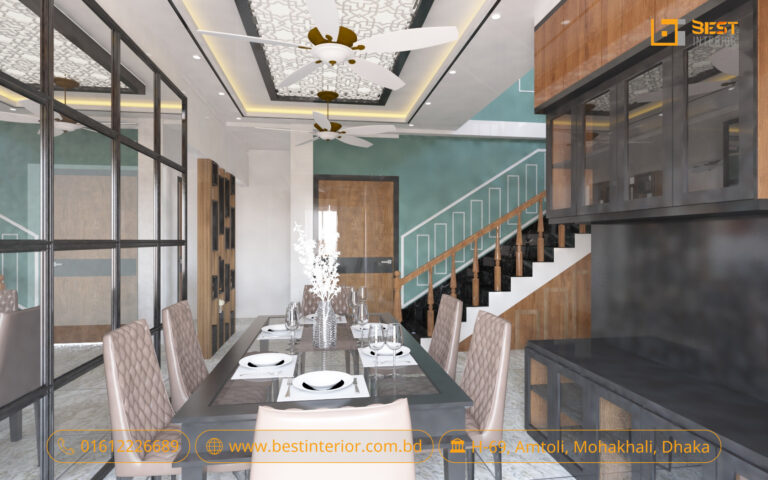
ফ্লোটিং ক্যাবিনেট ছোট ডিভাইসের জন্য ভালো, বড় রিসিভার হলে গভীর ইউনিট বা ফ্লোর স্ট্যান্ডিং বেছে নিন।
FAQ
Can I mount a TV on a marble panel?
Yes, but confirm the marble panel’s backing and wall substrate before fixing. Heavy slabs need mechanical anchors to the structural wall or a reinforced frame behind the panel.
How deep should a floating cabinet be for AV gear?
Typical floating cabinets are 300–350 mm deep. If you have larger receivers or need extra ventilation, choose 400 mm+ depth or a low-profile floor unit.
How do I avoid glare from ceiling lighting on a glossy TV-wall finish?
Use concealed cove lighting that washes the ceiling, position recessed lights to the sides, and test finishes at typical viewing angles before finalising materials.
Do wood veneers expand during monsoon season?
Natural veneers can move with humidity. Use engineered veneer panels or moisture-stable laminates and allow small expansion gaps in joints to prevent visible warping.
Next step
If you’d like a direct comparison for your Eastern Housing living room, send Best Interior your TV-wall measurements and preferred finishes so we can prepare two tailored options.

Related articles from Best Interior
- TV wall and ceiling design Bangladesh options
- Duplex interior options Eastern Housing overview
- Connected Wood and White Flat Interior Concept
Sources
Guidance on lighting layout and recessed spacing from the U.S. Department of Energy: building_america/strategy_guideline_high_perf_lighting.pdf.
Floating cabinet practical notes and depth guidance: tv-sizes.com and homespe.com.
Marble and stone care recommendations: Laticrete surface care guide.
False-ceiling installation constraints and recessed-fixture notes: lrc.rpi.edu recessed fixture guidance.
Website reference: Visit the website.
0 comments